

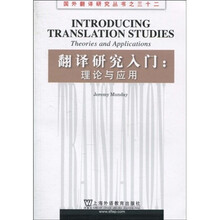
翻译研究入门:理论与应用
List of figures and tables
Acknowledgements
List of abbreviations
Introduction
1 Main issues of translation studies
1.1 The concept of translation
1.2 What is translation studies?
1.3 A brief history of the discipline
1.4 The Holmes/Toury map
1.5 Developments since the 1970s
1.6 Aim of this book and a guide to chapters
2 Translation theory before the twentieth century
2.0 Introduction
2.1 Word.for-word or sense-for-sense?
2.2 Martin Luther
2.3 Faithfulness, spirit and truth
2.4 Early attempts at systematic translation theory: Dryden,Dolet and Tytler
2.5 Schleiermacher and the valorization of the foreign
2.6 Translation theory of the nineteenth and early twentieth centuries in Britain
2.7 Towards contemporary translation theory
3 Equivalence and equivalent effect
3.0 Introduction
3.1 Roman Jakobson: the nature of linguistic meaning and equivalence
3.2 Nida and the science of translating
3.3 Newmark: semantic and communicativetranslation
3.4 Koller: Korrespondenz and Aquivalenz
3.5 Later developments in equivalence
4 The translation shift approach
4.0 Introduction
4.1 Vinay and Darbelnets model
4.2 Catford and translation shifts
4.3 Czech writing on translation shifts
4.4 Van Leuven-Zwarts comparative——descriptive model of translation shifts
5 Functional theories of translation
5.0 Introduction
5.1 Text type
5.2 Translational action
5.3 Skopos theory
5.4 Translation.oriented text analysis
6 Discourse and register analysis approaches
6.0 Introduction
6.1 The Hallidayan model of language and discourse
6.2 Houses model of translation quality assessment
6.3 Bakers text and pragmatic level analysis: a coursebook for translators
6.4 Hatim and Mason: the semiotic level of context and discourse
6.5 Criticisms of discourse and register analysis approaches to translation
7 Systems theories
7.0 Introduction
7.1 Polysystem theory
7.2 Toury and descriptive translation studies
7.3 Chestermans translation norms
7.4 Other models of descriptive translation studies:Lambert and van Gorp and the Manipulation School
8 Varieties of cultural studies
8.0 Introduction
8.1 Translation as rewriting
8.2 Translation and gender
8.3 Postcolonial translation theory
8.4 The ideologies of the theorists
9 Translating the foreign: the (in)visibility of translation
9.0 Introduction
9.1 Venuti: the cultural and political agenda of translation
9.2 Literary translators accounts of their work
9.3 The power network of the publishing industry
9.4 Discussion of Venutis work
9.5 The reception and reviewing of translations
10 Philosophical theories of translation
10.0 Introduction
10.1 Steiners hermeneutic motion
10.2 Ezra Pound and the energy of language
10.3 The task of the translator: Walter Benjamin
10.4 Deconstruction
11 Translation studies as an interdiscipline
11.0 Introduction
11.1 Discipline, interdiscipline or sub-discipline?
11.2 Mary Snell-Hornbys integrated approach
11.3 Interdisciplinary approaches
11.4 The future: co-operation or fragmentation?
Appendix: internet links
Notes
Bibliography
Index
Acknowledgements
List of abbreviations
Introduction
1 Main issues of translation studies
1.1 The concept of translation
1.2 What is translation studies?
1.3 A brief history of the discipline
1.4 The Holmes/Toury map
1.5 Developments since the 1970s
1.6 Aim of this book and a guide to chapters
2 Translation theory before the twentieth century
2.0 Introduction
2.1 Word.for-word or sense-for-sense?
2.2 Martin Luther
2.3 Faithfulness, spirit and truth
2.4 Early attempts at systematic translation theory: Dryden,Dolet and Tytler
2.5 Schleiermacher and the valorization of the foreign
2.6 Translation theory of the nineteenth and early twentieth centuries in Britain
2.7 Towards contemporary translation theory
3 Equivalence and equivalent effect
3.0 Introduction
3.1 Roman Jakobson: the nature of linguistic meaning and equivalence
3.2 Nida and the science of translating
3.3 Newmark: semantic and communicativetranslation
3.4 Koller: Korrespondenz and Aquivalenz
3.5 Later developments in equivalence
4 The translation shift approach
4.0 Introduction
4.1 Vinay and Darbelnets model
4.2 Catford and translation shifts
4.3 Czech writing on translation shifts
4.4 Van Leuven-Zwarts comparative——descriptive model of translation shifts
5 Functional theories of translation
5.0 Introduction
5.1 Text type
5.2 Translational action
5.3 Skopos theory
5.4 Translation.oriented text analysis
6 Discourse and register analysis approaches
6.0 Introduction
6.1 The Hallidayan model of language and discourse
6.2 Houses model of translation quality assessment
6.3 Bakers text and pragmatic level analysis: a coursebook for translators
6.4 Hatim and Mason: the semiotic level of context and discourse
6.5 Criticisms of discourse and register analysis approaches to translation
7 Systems theories
7.0 Introduction
7.1 Polysystem theory
7.2 Toury and descriptive translation studies
7.3 Chestermans translation norms
7.4 Other models of descriptive translation studies:Lambert and van Gorp and the Manipulation School
8 Varieties of cultural studies
8.0 Introduction
8.1 Translation as rewriting
8.2 Translation and gender
8.3 Postcolonial translation theory
8.4 The ideologies of the theorists
9 Translating the foreign: the (in)visibility of translation
9.0 Introduction
9.1 Venuti: the cultural and political agenda of translation
9.2 Literary translators accounts of their work
9.3 The power network of the publishing industry
9.4 Discussion of Venutis work
9.5 The reception and reviewing of translations
10 Philosophical theories of translation
10.0 Introduction
10.1 Steiners hermeneutic motion
10.2 Ezra Pound and the energy of language
10.3 The task of the translator: Walter Benjamin
10.4 Deconstruction
11 Translation studies as an interdiscipline
11.0 Introduction
11.1 Discipline, interdiscipline or sub-discipline?
11.2 Mary Snell-Hornbys integrated approach
11.3 Interdisciplinary approaches
11.4 The future: co-operation or fragmentation?
Appendix: internet links
Notes
Bibliography
Index
杰里米·蒙代(Jeremy Munday),英国著名翻译理论家,著述甚多,主要有:《翻译中的文体与意识形态》 (Style and Ideology in Translation)、《翻译研究指南》(A Comparfion to Transtation Studies)、《高级译学原典读本》(Translation:Anadvanced Resource Book)(合著)等。
《翻译研究入门:理论与应用》系统介绍了古罗马以来的翻译理论流派与思潮,精心绘制了一幅西方译学研究的进程图,全面展现了本领域最新的学术成果及研究动向。与同类著述相比,《翻译研究入门——理论与应用》具有如下鲜明的特点和独特的价值:强调理论之间的内在联系,体现翻译学的系统性;注重理论与实际相结合,突出翻译学的实证性;鼓励进行独立思考与研究,追求翻译学的创新性,等等。
作为翻译学的入门教程,《翻译研究入门——理论与应用》以通俗易懂的语言对西方翻译学的产生、发展和壮大进行了梳理,为学生、教师、研究者及翻译人员等开启了当代西方译学研究的新天地。
作为翻译学的入门教程,《翻译研究入门——理论与应用》以通俗易懂的语言对西方翻译学的产生、发展和壮大进行了梳理,为学生、教师、研究者及翻译人员等开启了当代西方译学研究的新天地。
比价列表


公众号、微信群
 缺书网
缺书网微信公众号
 扫码进群
扫码进群实时获取购书优惠