

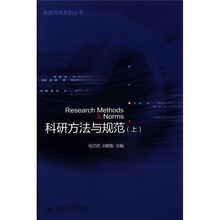
科研方法与规范(上)
Part Ⅰ:Research Methods
1 Qualitative Methods
l.l ntroduction to Qualitative Resear
1.1.1 Whatls Qualitative Research
1.1.2 What Can We Learn from Qualitative Research
1.1.3 Some Qualitative Research Methods and Data Forms
1.1.4 The Advantages of Qualitative Methods for Exploratory Research
1.2 Participant Observation NN
1.2.1 Overview ofParticipant Observation
1.2.2 How to Be an Effective Participant Observer
1.3 In-Depth Interviews
1.3.1 Overview ofln-Depthlnterviewing
1.3.2 How to Be an Effective Interviewer
1.3.3 Managing the Interview
1.3.4 Some Techniques for Effective Questioning
1.3.5 How to Use Probes
1.3.6 How to Use Indirect Probes
1.3.7 Taking Field Notes
1.3.8 Expanding Notes
1.4 Focus Groups
1.4.1 Overview ofFocus Groups
1.4.2 How to Be an Effective Moderator
1.4.3 How to Be an Effective Note-Taker
2 QuantitativeMethods
2.1.Introductrion to Quantitahve Research Method
2.1.1 What Is Quantitative Research
2.1.2 Features Associated with the Quantitative Approach
2.1.3 Data Collection Methods
2.2. Sampling
2.2.lRandomSelection
2.2.2 Systematic Sampling
2.3. Survey
2.3.1 Questionnaire
2.3.2 Interview Survey
2.3.3 Secondary Analysis
2.4. Experiment
2.4.1 Topics Appropriate to Experiments
2.4.2 The Classical Experiment
2.4.3 Selecting Subjects
2.4.4 Strengths and Weaknesses of the Experimental Method
2.4.5 Quantification of Data
3 Mixed Method Studies
3.1. Mixed Methods and Mixed Model Studies
3.1.1 Equal Status Mixed Method Designs
3.1.2 Dominant-Less Dommant Mixed Method Designs
3.1.3 Sequential Mixed Method Designs
3.1.4. Parallel/Simultaneous Mixed Method Designs
3.1.5 Studies with Multilevel Use ofApproaches
3.2 Data Collection Strategies and Research Procedures
3.2.1 Traditional and Alternative Approaches to Data Collection
3.2.2 Data Collection as a Planned Strategy
3.2.3 Effects ofData Collection on the Behavior or Responses of the Participants
3.2.4. Data Collection Strategies
4 Case Studies
4.l lntroduction to Case Study
4.1.1 The Case Study as a Research Strategy
4.1.2 Comparing Case Studies to Other Research Strategies
4.1.3 When to Use Each Strategy
4.2 Conducting Case Studies: Preparing for Data Collection
4.2.1 The Case Study Investigator: Desired Skills
4.2.2 Training and Preparation for a Specific Case Study
4.2.3 The Case Study Protocol
4.2.4 The Pilot Case Study
4.3 Conduchng Case Studies: Collecting the Evidence
4.3.1 Six Sources of Evidence
4.3.2 Three Principles ofData Collection
Part Ⅱ:Writing a Research Proposal
1 General Overview
1.1 What Is Research
1.2 Types ofResearch
1.2.1 Primary Research
1.2.2 Applied Research
1.2.3 Market Research
1.2.4 Feasibility Research
1.2.5 Scholarly Research
1.3 What Is a Research Proposal (RP)
1.4. Proposal Components-Some Hints
1.4.1 Title
1.4.2 Abstract
1.4.3 Introduction
1.4.4 Literature Review
1.4.5 Methodology and Methods
1.4.6 Results
……
Part Ⅲ:Actual Writing
Part Ⅳ:Documenting Sources
Appendix A
Appendix B
Bibliography
1 Qualitative Methods
l.l ntroduction to Qualitative Resear
1.1.1 Whatls Qualitative Research
1.1.2 What Can We Learn from Qualitative Research
1.1.3 Some Qualitative Research Methods and Data Forms
1.1.4 The Advantages of Qualitative Methods for Exploratory Research
1.2 Participant Observation NN
1.2.1 Overview ofParticipant Observation
1.2.2 How to Be an Effective Participant Observer
1.3 In-Depth Interviews
1.3.1 Overview ofln-Depthlnterviewing
1.3.2 How to Be an Effective Interviewer
1.3.3 Managing the Interview
1.3.4 Some Techniques for Effective Questioning
1.3.5 How to Use Probes
1.3.6 How to Use Indirect Probes
1.3.7 Taking Field Notes
1.3.8 Expanding Notes
1.4 Focus Groups
1.4.1 Overview ofFocus Groups
1.4.2 How to Be an Effective Moderator
1.4.3 How to Be an Effective Note-Taker
2 QuantitativeMethods
2.1.Introductrion to Quantitahve Research Method
2.1.1 What Is Quantitative Research
2.1.2 Features Associated with the Quantitative Approach
2.1.3 Data Collection Methods
2.2. Sampling
2.2.lRandomSelection
2.2.2 Systematic Sampling
2.3. Survey
2.3.1 Questionnaire
2.3.2 Interview Survey
2.3.3 Secondary Analysis
2.4. Experiment
2.4.1 Topics Appropriate to Experiments
2.4.2 The Classical Experiment
2.4.3 Selecting Subjects
2.4.4 Strengths and Weaknesses of the Experimental Method
2.4.5 Quantification of Data
3 Mixed Method Studies
3.1. Mixed Methods and Mixed Model Studies
3.1.1 Equal Status Mixed Method Designs
3.1.2 Dominant-Less Dommant Mixed Method Designs
3.1.3 Sequential Mixed Method Designs
3.1.4. Parallel/Simultaneous Mixed Method Designs
3.1.5 Studies with Multilevel Use ofApproaches
3.2 Data Collection Strategies and Research Procedures
3.2.1 Traditional and Alternative Approaches to Data Collection
3.2.2 Data Collection as a Planned Strategy
3.2.3 Effects ofData Collection on the Behavior or Responses of the Participants
3.2.4. Data Collection Strategies
4 Case Studies
4.l lntroduction to Case Study
4.1.1 The Case Study as a Research Strategy
4.1.2 Comparing Case Studies to Other Research Strategies
4.1.3 When to Use Each Strategy
4.2 Conducting Case Studies: Preparing for Data Collection
4.2.1 The Case Study Investigator: Desired Skills
4.2.2 Training and Preparation for a Specific Case Study
4.2.3 The Case Study Protocol
4.2.4 The Pilot Case Study
4.3 Conduchng Case Studies: Collecting the Evidence
4.3.1 Six Sources of Evidence
4.3.2 Three Principles ofData Collection
Part Ⅱ:Writing a Research Proposal
1 General Overview
1.1 What Is Research
1.2 Types ofResearch
1.2.1 Primary Research
1.2.2 Applied Research
1.2.3 Market Research
1.2.4 Feasibility Research
1.2.5 Scholarly Research
1.3 What Is a Research Proposal (RP)
1.4. Proposal Components-Some Hints
1.4.1 Title
1.4.2 Abstract
1.4.3 Introduction
1.4.4 Literature Review
1.4.5 Methodology and Methods
1.4.6 Results
……
Part Ⅲ:Actual Writing
Part Ⅳ:Documenting Sources
Appendix A
Appendix B
Bibliography
向明友,男,北京航空航天大学外语学院院长,教授,博士生导师。教育部新世纪优秀人才。
研究领域包括英语语言学、语用学、功能语言学、英汉对比研究、英汉语法化研究等。在国内专业核心期刊及国际、国内学术会议上发表研究性论文三十余篇,主持国家社会科学基金项目等科研项目若干。
伍巧芳,女,华东政法大学副教授。硕士毕业于英国伯恩茅斯大学商学院,华东政法大学经济法博士,硕士生导师。研究领域包括商务英语、金融立法和法律翻译研究等。在国家级专业核心期刊发表研究性论文十余篇,出版普通高等教育“十一五”国家级规划教材、专著和译著各一部。
研究领域包括英语语言学、语用学、功能语言学、英汉对比研究、英汉语法化研究等。在国内专业核心期刊及国际、国内学术会议上发表研究性论文三十余篇,主持国家社会科学基金项目等科研项目若干。
伍巧芳,女,华东政法大学副教授。硕士毕业于英国伯恩茅斯大学商学院,华东政法大学经济法博士,硕士生导师。研究领域包括商务英语、金融立法和法律翻译研究等。在国家级专业核心期刊发表研究性论文十余篇,出版普通高等教育“十一五”国家级规划教材、专著和译著各一部。
《科研方法与规范(上)》综合国际上出版社出版的科研写作规范与方法类著作,采用中英文对照的内容编写模式,兼顾学术研究能力和外语水平不同层次读者的需求,全面系统介绍了科研写作的研究方法、研究计划的撰写、正文的写作以及参考文献的引证方法和规范。
比价列表


公众号、微信群
 缺书网
缺书网微信公众号
 扫码进群
扫码进群实时获取购书优惠