

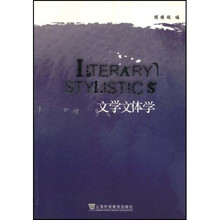
文学文体学
目 录内容简介
Introduction
PART ONE
Aspects of Language in Literature
1 Register as a Literary Technique
1.1 Levels of Formality in English
1.1.1 The First Range: Written and Spoken English
1.1.2 The Second Range. Formal and Informal English
1.1.3 The Third Range. Polite and Familiar Language
1.2 Register as a Vehicle for Characterization
1.3 Register for Ironic and Dramatic Effect
1.4 Reading and Discussion
1.4.1 Charles Dickens: Great Expectations
1.4.2 James Joyce: "Clay" .
1.4.3 Joseph Heller: Catch-22
1.4.4 A.G. Gardiner: "On Big Words" .
1.5 Selected Bibliography for Further Reading
2 Syntax
2.1 Coordination and Subordination
2.2 Periodic Sentence and Loose Sentence
2.3 Sentence Length
2.4 Ellipsis and Repetition
2.5 Inversion
2.6 Balance: Parallelism, Antithesis, and Symmetry
2.7 Reading and Discussion (I)
2.7.1 Margaret Drabble: "The Flight from Paris", Jerusalem The Golden
2.7.2 John Keats: "On First Looking into Chapmans Homer"
2.7.3 John Lyly: A Description of the Hero in Euphues
2.7.4 Jane Austen: A Study of the Sentence-length of the Opening Paragraphs of Emma
2.8 Reading and Discussion (II)
2.8.1 Parallelism
2.8.2 The Effect of Short Coordinate Sentences
2.8.3 Parallelism: A Comparative Study
3 Irony
3.1 Introduction
3.2 Ironic Techniques (I)
3.3 Ironic Techniques (II)
3.4 Reading and Discussion
3.4.1 Jane Austen: Emma
3.4.2 Evelyn Waugh: Love Among the Ruins
3.4.3 Evelyn Waugh. A Handful of Dust
3.4.4 William Shakespeare: Julius Caesar
3.5 Selected Bibliography for Further Reading
4 Imagery
4.1 Introduction
4.2 Imagery in Poetry
4.3 Imagery in Fiction (I)
4.4 Imagery in Fiction (II)
4.5 Reading and Discussion David Storey: Howarth from Flight into Camden
4.6 Selected Bibliography for Further Reading
5 Sound and Rhythm
5.1 Sound
5.1.1 Rhyme
5.1.2 Sound and Meaning
5.2 Rhythm
5.2.1 Meter
5.2.2 Rhythm and Meaning
5.3 Reading and Discussion
5.4 Selected Bibliography for Further Reading
PART TWO
Explication of Text: A Method of Analysis and Some
Examples
6 D.H. Lawrence: The Opening Passage of "Odour of Chrysanthemums"
6.1 Introduction
6.2 Text
6.3 Explication
6.3.1 Lexical Features
6.3.1.1 Nouns
6.3.1.2 Verbs
6.3.1.3 Adjectives
6.3.1.4 Adverbs
6.3.1.5 General
6.3.2 Grammatical Features
6.3.2.1 Sentence Complexity
6.3.2.2 Word Classes
6.3.3 Figures of Speech
6.3.3.1 Schemes
6.3.3.2 Metaphor and Simile
6.3.4 Cohesion and Context
6.3.4.1 Lexical Repetition
6.3.4.2 Definite Article
6.3.4.3 Other Contextual Features
7 Henry James: The Opening Passage of "The Pupil"
7.1 Introduction
7.2 Text
7.3 Explication
7.3.1 Lexical Features
7.3.1.1 Nouns
7.3.1.2 Adjectives
7.3.1.3 Verbs
7.3.1.4 Adverbs
7.3.1.5 General
7.3.2 Grammatical Features
7.3.2.1 Sentence Structure
7.3.2.2 Subordinate Clauses
7.3.2.3 Verb Phrases
7.3.2.4 Negatives
7.3.3 Figures of Speech
7.3.3.1 Irony
7.3.3.2 Other Ironic Signals
7.3.4 Cohesion and Context
7.3.4.1 Elegant Variation
7.3.4.2 Coreference Generally
7.3.4.3 Context
7.4 Conclusion
8 Jane Austen: A Passage from Persuasion
8.1 Text
8.2 Explication
9 Jane Austen: Pride and Prejudice, Its Language and Style
9.1 Introduction
9.2 Text
9.3 Explication
10 J.D. Salinger: The Catcher in the Rye, an Investigation of Its Language
10.1 Text
10.2 Explication
10.3 More Examples for Study
APPENDⅨ I: 文学形像的民族性及翻译
APPENDⅨ Ⅱ: Bamboo or Mushroom: Imagery in Chinese Poetry and Its Translation
APPENDⅨ Ⅲ: 英诗的韵律及其表意功能
APPENDⅨ Ⅳ: 英汉诗歌音韵表意功能比较
Bibliography
PART ONE
Aspects of Language in Literature
1 Register as a Literary Technique
1.1 Levels of Formality in English
1.1.1 The First Range: Written and Spoken English
1.1.2 The Second Range. Formal and Informal English
1.1.3 The Third Range. Polite and Familiar Language
1.2 Register as a Vehicle for Characterization
1.3 Register for Ironic and Dramatic Effect
1.4 Reading and Discussion
1.4.1 Charles Dickens: Great Expectations
1.4.2 James Joyce: "Clay" .
1.4.3 Joseph Heller: Catch-22
1.4.4 A.G. Gardiner: "On Big Words" .
1.5 Selected Bibliography for Further Reading
2 Syntax
2.1 Coordination and Subordination
2.2 Periodic Sentence and Loose Sentence
2.3 Sentence Length
2.4 Ellipsis and Repetition
2.5 Inversion
2.6 Balance: Parallelism, Antithesis, and Symmetry
2.7 Reading and Discussion (I)
2.7.1 Margaret Drabble: "The Flight from Paris", Jerusalem The Golden
2.7.2 John Keats: "On First Looking into Chapmans Homer"
2.7.3 John Lyly: A Description of the Hero in Euphues
2.7.4 Jane Austen: A Study of the Sentence-length of the Opening Paragraphs of Emma
2.8 Reading and Discussion (II)
2.8.1 Parallelism
2.8.2 The Effect of Short Coordinate Sentences
2.8.3 Parallelism: A Comparative Study
3 Irony
3.1 Introduction
3.2 Ironic Techniques (I)
3.3 Ironic Techniques (II)
3.4 Reading and Discussion
3.4.1 Jane Austen: Emma
3.4.2 Evelyn Waugh: Love Among the Ruins
3.4.3 Evelyn Waugh. A Handful of Dust
3.4.4 William Shakespeare: Julius Caesar
3.5 Selected Bibliography for Further Reading
4 Imagery
4.1 Introduction
4.2 Imagery in Poetry
4.3 Imagery in Fiction (I)
4.4 Imagery in Fiction (II)
4.5 Reading and Discussion David Storey: Howarth from Flight into Camden
4.6 Selected Bibliography for Further Reading
5 Sound and Rhythm
5.1 Sound
5.1.1 Rhyme
5.1.2 Sound and Meaning
5.2 Rhythm
5.2.1 Meter
5.2.2 Rhythm and Meaning
5.3 Reading and Discussion
5.4 Selected Bibliography for Further Reading
PART TWO
Explication of Text: A Method of Analysis and Some
Examples
6 D.H. Lawrence: The Opening Passage of "Odour of Chrysanthemums"
6.1 Introduction
6.2 Text
6.3 Explication
6.3.1 Lexical Features
6.3.1.1 Nouns
6.3.1.2 Verbs
6.3.1.3 Adjectives
6.3.1.4 Adverbs
6.3.1.5 General
6.3.2 Grammatical Features
6.3.2.1 Sentence Complexity
6.3.2.2 Word Classes
6.3.3 Figures of Speech
6.3.3.1 Schemes
6.3.3.2 Metaphor and Simile
6.3.4 Cohesion and Context
6.3.4.1 Lexical Repetition
6.3.4.2 Definite Article
6.3.4.3 Other Contextual Features
7 Henry James: The Opening Passage of "The Pupil"
7.1 Introduction
7.2 Text
7.3 Explication
7.3.1 Lexical Features
7.3.1.1 Nouns
7.3.1.2 Adjectives
7.3.1.3 Verbs
7.3.1.4 Adverbs
7.3.1.5 General
7.3.2 Grammatical Features
7.3.2.1 Sentence Structure
7.3.2.2 Subordinate Clauses
7.3.2.3 Verb Phrases
7.3.2.4 Negatives
7.3.3 Figures of Speech
7.3.3.1 Irony
7.3.3.2 Other Ironic Signals
7.3.4 Cohesion and Context
7.3.4.1 Elegant Variation
7.3.4.2 Coreference Generally
7.3.4.3 Context
7.4 Conclusion
8 Jane Austen: A Passage from Persuasion
8.1 Text
8.2 Explication
9 Jane Austen: Pride and Prejudice, Its Language and Style
9.1 Introduction
9.2 Text
9.3 Explication
10 J.D. Salinger: The Catcher in the Rye, an Investigation of Its Language
10.1 Text
10.2 Explication
10.3 More Examples for Study
APPENDⅨ I: 文学形像的民族性及翻译
APPENDⅨ Ⅱ: Bamboo or Mushroom: Imagery in Chinese Poetry and Its Translation
APPENDⅨ Ⅲ: 英诗的韵律及其表意功能
APPENDⅨ Ⅳ: 英汉诗歌音韵表意功能比较
Bibliography
目 录内容简介
《文学文体学》介绍了文学文本分析的一些基本理论,涉及语域、句法、修辞、意象、音韵等方面,并通过大量的实例展示文学文本分析的具体办法。《文学文体学》内容深入浅出,通俗易懂,适合英语语言文学专业高年级学生和研究生使用。
比价列表


公众号、微信群
 缺书网
缺书网微信公众号
 扫码进群
扫码进群实时获取购书优惠