

最简句法入门:探究英语的结构
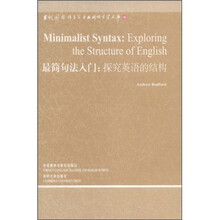
作者:(英)雷备福 著
出版:外语教学与研究出版社 2009.3
丛书:当代国外语言学与应用语言学文库
页数:512
定价:63.90 元
ISBN-13:9787560081458
ISBN-10:7560081452 去豆瓣看看
出版:外语教学与研究出版社 2009.3
丛书:当代国外语言学与应用语言学文库
页数:512
定价:63.90 元
ISBN-13:9787560081458
ISBN-10:7560081452 去豆瓣看看
目 录内容简介
lGrammar
1.1 0verview
1.2 Traditional grammar
1.3 Universal Grammar
1.4 The Language Faculty
1.5 Principles of Universal Grammar
1.6 Parameters
1.7 Parameter—setting
1.8 Evidence used to set parameters
1.9 Summary
Workbook section
2 WOrds
2.1 Overview
2.2 Grammatical categories
2.3 Categorising words
2.4 Functional categories
2.5 Determiners and quantifiers
2.6 Pronouns
2.7 Auxiliaries
2.8 lnfinitival to
2.9 Complementisers
2.10 Labelled bracketing
2.11 Grammatical features
2.12 Summary
Workbook section
3 Structure
3.1 CIverview
3.2 Phrases
3.3 Clauses
3.4 Specifiers
3.5 Intermediate and maximal projections
3.6 Testing structure
3.7 Syntactic relations
3.8 Bare phrase structure
4 Null constituents
4.1 Overview
4.2 Null subjects
4.3 Null auxiliaries
4.4 Null T in auxiliariless finite clauses
4.5 Null T in bare infinitive clauses
4.6 Null C in finite clauses
4.7 Null C in non—finite clauses
4.8 Defective clauses
4.9 Case properties of subjects
4.10 Null determiners
4.11 Summary
Workbook section
5 Head movement
5.1 Overview
5.2 T—TO—C movement
5.3 Movement as copying and deletion
5.4 V—TO—T movement
5.5 Head movement
5.6 Auxiliary raising
5.7 Another look at negation
5.8 DO—support
5.9 Head movement in nominals
5.10 Summary
Workbook section
6 Wh-movement
6.1 Overview
6.2 Wh—questions
6.3 Wh—movement as a copying operation
6.4 Wh—movement.EPP and the Attract Closest Principle
6.5 Explaining what moves where
6.6 Wh—subject questions
6.7 Pied—piping
6.8 Yes—no questions
6.9 Wh—exclamatives
6.10 Relative clauses
6.11 That—relatives
6.12 Summary
WOrk book section
7 A-movement
7.1 Overview
7.2 Subjects in Belfast English
7.3 Quotatives and idioms
7.4 Argument structure
7.5 Thematic roles
7.6 Unaccusative predicates
7.7 Passive predicates
7.8 Long—distance passivisation
7.9 Raising
7 10 Comparing raising and control predicates
7.11 Summary
Work book section
8 Agreement,case and movement
8.1 Overview
8.2 Agreement
8.3 Feature valuation
8.4 Uninterpretable features and feature—deletion
8.5 Expletive it subjects
8.6 Expletive there subjects
8.7 Agreement and A—movement
8.8 EPP in control infinitives
8.9 EPP in other infinitives
8.10 Summary
Work book section
9 Split projections
9.1 Overview
9.2 Split CP:Force.Topic and Focus projections
9.3 Split CP:Finiteness projection
9.4 Split VPs:VP shells in ergative structures
9.5 VP shells in resultative.double—object and object—control
structures
9.6 VP shells in transitive,unergative,unaccusative,raising and locative inversion structures
9.7 Transitive light verbs and accusative case assignment
9.8 Evidence for a further projection in transitive verb phrases
9.9 Extending the shell analysis tO nominals
9.10 Summary
Work book section
10 Phases
10 1 Overview
10.2 Phases
l0.3 Intransitive and defective clauses
l0.4 Wh—movement through spec—CP
l0.5 Wh—movement through spec—vP in transitive clauses
l0.6 Evidence for successive—cyclic wh—movement throughspec—CP
10.7 Evidence for wh—movement through spec—vP in transitive clauses
10.8 The role of phases in Lexical selection
10.9 Questions about phases
l0.10 The nature of A—bar movement
10.11 Summary
Work book section
Glossart and list ofabbreviations
References
Index
1.1 0verview
1.2 Traditional grammar
1.3 Universal Grammar
1.4 The Language Faculty
1.5 Principles of Universal Grammar
1.6 Parameters
1.7 Parameter—setting
1.8 Evidence used to set parameters
1.9 Summary
Workbook section
2 WOrds
2.1 Overview
2.2 Grammatical categories
2.3 Categorising words
2.4 Functional categories
2.5 Determiners and quantifiers
2.6 Pronouns
2.7 Auxiliaries
2.8 lnfinitival to
2.9 Complementisers
2.10 Labelled bracketing
2.11 Grammatical features
2.12 Summary
Workbook section
3 Structure
3.1 CIverview
3.2 Phrases
3.3 Clauses
3.4 Specifiers
3.5 Intermediate and maximal projections
3.6 Testing structure
3.7 Syntactic relations
3.8 Bare phrase structure
4 Null constituents
4.1 Overview
4.2 Null subjects
4.3 Null auxiliaries
4.4 Null T in auxiliariless finite clauses
4.5 Null T in bare infinitive clauses
4.6 Null C in finite clauses
4.7 Null C in non—finite clauses
4.8 Defective clauses
4.9 Case properties of subjects
4.10 Null determiners
4.11 Summary
Workbook section
5 Head movement
5.1 Overview
5.2 T—TO—C movement
5.3 Movement as copying and deletion
5.4 V—TO—T movement
5.5 Head movement
5.6 Auxiliary raising
5.7 Another look at negation
5.8 DO—support
5.9 Head movement in nominals
5.10 Summary
Workbook section
6 Wh-movement
6.1 Overview
6.2 Wh—questions
6.3 Wh—movement as a copying operation
6.4 Wh—movement.EPP and the Attract Closest Principle
6.5 Explaining what moves where
6.6 Wh—subject questions
6.7 Pied—piping
6.8 Yes—no questions
6.9 Wh—exclamatives
6.10 Relative clauses
6.11 That—relatives
6.12 Summary
WOrk book section
7 A-movement
7.1 Overview
7.2 Subjects in Belfast English
7.3 Quotatives and idioms
7.4 Argument structure
7.5 Thematic roles
7.6 Unaccusative predicates
7.7 Passive predicates
7.8 Long—distance passivisation
7.9 Raising
7 10 Comparing raising and control predicates
7.11 Summary
Work book section
8 Agreement,case and movement
8.1 Overview
8.2 Agreement
8.3 Feature valuation
8.4 Uninterpretable features and feature—deletion
8.5 Expletive it subjects
8.6 Expletive there subjects
8.7 Agreement and A—movement
8.8 EPP in control infinitives
8.9 EPP in other infinitives
8.10 Summary
Work book section
9 Split projections
9.1 Overview
9.2 Split CP:Force.Topic and Focus projections
9.3 Split CP:Finiteness projection
9.4 Split VPs:VP shells in ergative structures
9.5 VP shells in resultative.double—object and object—control
structures
9.6 VP shells in transitive,unergative,unaccusative,raising and locative inversion structures
9.7 Transitive light verbs and accusative case assignment
9.8 Evidence for a further projection in transitive verb phrases
9.9 Extending the shell analysis tO nominals
9.10 Summary
Work book section
10 Phases
10 1 Overview
10.2 Phases
l0.3 Intransitive and defective clauses
l0.4 Wh—movement through spec—CP
l0.5 Wh—movement through spec—vP in transitive clauses
l0.6 Evidence for successive—cyclic wh—movement throughspec—CP
10.7 Evidence for wh—movement through spec—vP in transitive clauses
10.8 The role of phases in Lexical selection
10.9 Questions about phases
l0.10 The nature of A—bar movement
10.11 Summary
Work book section
Glossart and list ofabbreviations
References
Index
目 录内容简介
《最简句法入门:探究英语的结构》清晰,详尽地介绍了建立在乔姆斯基最简方案理论基础上的一些最新句法理论。作为句法学理论和英语句法教材,《最简句法入门:探究英语的结构》内容丰富、由浅入深、可读性强,每章结束后都配有练习题供学生深入分析英语短语及名子,书中还提供了一个内容丰富的术语词汇表。即便是对句法理论了解不的读者亦可使用《最简句法入门:探究英语的结构》。
比价列表


公众号、微信群
 缺书网
缺书网微信公众号
 扫码进群
扫码进群实时获取购书优惠