Chapter One Contrastive Analysis
1.1 What Is Contrastive Analysis
1.2 Background of Contrastive Analysis
1.3 Rationale for Contrastive Analysis
1.4 Theoretical Assumptions of Contrastive Analysis
1.5 Theoretical Basis of Contrastive Linguistics
1.5.1 Psychological Basis of Contrastive Analysis
1.5.2 Linguistic Basis of Contrastive Analysis
1.6 Application of TG Grammar to Contrastive Analysis
1.7 Pedagogical Applications of Contrastive Analysis
1.8 Criticisms of Contrastive Analysis
Chapter Two Error Analysis
2.1 What Is Error Analysis
2.2 Rationale for Error Analysis
2.3 Theoretical Assumptions of Error Analysis
2.4 Claims of Error Analysis as a Primary Pedagogical Tool
2.5 Describing Errors
2.5.1 Error VS. Mistake
2.5.2 Levels of Errors
2.5.3 Types and Causes of Errors
2.6 Techniques for Systematic Error Analysis
2.6.1 Introduction
2.6.2 Procedures
2.7 Computerized Corpora of Errors
2.8 Pedagogical Applications of Error Analysis
2.9 Modern Contrastive Linguistics and Its Significance
Chapter Three Contrastive Study between Chinese and English in Phonology
3.1 What Is Phonology
3.2 Phonological Analysis
3.3 Two Phonological Models
3.3.1 Taxonomic Phonology
3.3.2 Generative Phonology
3.4 Differences between Chinese and English in Phonology and Difficulties Involved in Learning
3.4.1 Differences in Syllable Structure and the General Pattern of Distribution of Consonants and Vowels in the Two Languages
3.4.2 Differences between Chinese and English in Consonants and Difficulties Involved
3.4.3 Differences between Chinese and English in Vowels and Difficulties Involved
3.5 Tones and Intonation
3.5.1 Tones in Chinese Language
3.5.2 Tones and Intonation in English
3.6 Linking in English
3.7 Assimilation of Sounds in English
3.8 Incomplete Plosives in English
3.9 Stress
3.10 Difficulties Involved in Learning
Chapter Four Contrastive Study between Chinese and English in Lexicology
4.1 What Is Lexieology
4.2 Word Formation of Chinese and English Language
4.2.1 Word Formation of Chinese Language
4.2.2 Word Formation of English Language
4.3 Idioms, Slangs and Colloquial Expressions in Chinese and English
4.3.1 Cheng Yu (set phrases) in Chinese
4.3.2 Colloquial and Idiomatic Expressions in Chinese
4.3.3 Idioms, Colloquialisms and Slangs in English
4.4 Sense Relationship in English and Chinese Language
4.4.1 Syntagmatic Semantic Relationships
4.4.2 Paradigmatic Semantic Relationships
4.5 Semantic Field(Semantic Domain/Lexical Field/Word Field)
4.5.1 What Is Semantic Field
4.5.2 Contrastive Study between English and Chinese in Color System
4.6 Coincidence, Parallel and Lexical Gap between English and Chinese
4.6.1 Coincidence
4.6.2 Parallel
4.6.3 Lexical Gap
4.7 Difficulties Involved in Learning
Chapter Five Contrastive Study between Chinese and English in Grammar
5.1 What Is Grammar
5.2 Morphological Contrastive Study
5.2.1 Aspect in English and Chinese
5.2.2 Tense in English and Chinese
5.2.3 Case in English and Chinese
5.2.4 Gender in English and Chinese
5.2.5 Mood in English and Chinese
5.2.6 Person in English and Chinese
5.2.7 Part of Speech in English and Chinese
……
Chapter Six Contrastive Study between Chinese and English at Text Level
Chapter Seven Contrastive Study between English and Chinese in Stylisticce-from some aspects
Bibliography
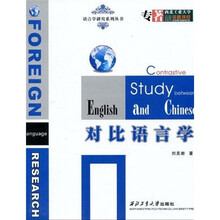
The book is mainly concerned with the contrastive study between English and Chinese at different linguistic levels,from the lower ones such as phonology, lexicology, syntax to higher ones such as text and stylistics based on modern linguistic and psychological theories. The book starts with a brief introduction to Contrastive Analysis and Error Analysis to facilitate the application of the study results to practical foreign language teaching and research. Then effort is made to find out the similarities and discrepancies between English and Chinese at different levels systematically to shed light on foreign language teaching and translation. One feature of the book lies in its rich examples in illustrating each important point. The bilingual examples can fully demonstrate the con-trasts between the two languages in a clear way. After point-ing out the differences for each point, the author also sug-gests learning difficulties and translation strategies.




 缺书网
缺书网 扫码进群
扫码进群