

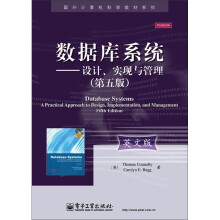
数据库系统:设计、实现与管理(第5版)(英文版)
PART 1 Background
CHAPTER 1 Introduction to Databases
1.1 Introduction
1.2 Traditional File-Based Systems
1.2.1 File-Based Approach
1.2.2 Limitations of the File-Based Approach
1.3 Database Approach
1.3.1 The Database
1.3.2 The Database Management System (DBMS)
1.3.3 (Database) Application Programs
1.3.4 Components of the DBMS Environment
1.3.5 Database Design: The Paradigm Shift
1.4 Roles in the Database Environment
1.4.1 Data and Database Administrators
1.4.2 Database Designers
1.4.3 Application Developers
1.4.4 End-Users
1.5 History of Database Management Systems
1.6 Advantages and Disadvantages of DBMSs
Chapter Summary
Review Questions
Exercises
CHAPTER 2 Database Environment
2.1 The Three-Level ANSI-SPARC Architecture
2.1.1 External Level
2.1.2 Conceptual Level
2.1.3 Internal Level
2.1.4 Schemas, Mappings, and Instances
2.1.5 Data Independence
2.2 Database Languages
2.2.1 The Data Definition Language (DDL)
2.2.2 The Data Manipulation Language (DML)
2.2.3 Fourth-Generation Languages (4GLs)
2.3 Data Models and Conceptual Modeling
2.3.1 Object-Based Data Models
2.3.2 Record-Based Data Models
2.3.3 Physical Data Models
2.3.4 Conceptual Modeling
2.4 Functions of a DBMS
Chapter Summary
Review Questions
Exercises
CHAPTER 3 Database Architectures and the Web
3.1 Multi-user DBMS Architectures
3.1.1 Teleprocessing
3.1.2 File-Server Architecture
3.1.3 Traditional Two-Tier Client-Server Architecture
3.1.4 Three-Tier Client-Server Architecture
3.1.5 N-Tier Architectures
3.1.6 Middleware
3.1.7 Transaction Processing Monitors
3.2 Web Services and Service-Oriented Architectures
3.2.1 Web Services
3.2.2 Service-Oriented Architectures (SOA)
3.3 Distributed DBMSs
3.4 Data Warehousing
3.5 Components of a DBMS
3.6 Oracle Architecture
3.6.1 Oracle誷 Logical Database Structure
3.6.2 Oracle誷 Physical Database Structure
Chapter Summary
Review Questions
Exercises
PART 2 The Relational Model and Languages
CHAPTER 4 The Relational Model
4.1 Brief History of the Relational Model
4.2 Terminology
4.2.1 Relational Data Structure
4.2.2 Mathematical Relations
4.2.3 Database Relations
4.2.4 Properties of Relations
4.2.5 Relational Keys
4.2.6 Representing Relational Database Schemas
4.3 Integrity Constraints
4.3.1 Nulls
4.3.2 Entity Integrity
4.3.3 Referential Integrity
4.3.4 General Constraints
4.4 Views
4.4.1 Terminology
4.4.2 Purpose of Views
4.4.3 Updating Views
Chapter Summary
Review Questions
Exercises
CHAPTER 5 Relational Algebra and Relational Calculus
5.1 The Relational Algebra
5.1.1 Unary Operations
5.1.2 Set Operations
5.1.3 Join Operations
5.1.4 Division Operation
5.1.5 Aggregation and Grouping Operations
5.1.6 Summary of the Relational Algebra Operations
5.2 The Relational Calculus
5.2.1 Tuple Relational Calculus
5.2.2 Domain Relational Calculus
5.3 Other Languages
Chapter Summary
Review Questions
Exercises
CHAPTER 6 SQL: Data Manipulation
6.1 Introduction to SQL
6.1.1 Objectives of SQL
6.1.2 History of SQL
6.1.3 Importance of SQL
6.1.4 Terminology
6.2 Writing SQL Commands
6.3 Data Manipulation
6.3.1 Simple Queries
6.3.2 Sorting Results (ORDER BY Clause)
6.3.3 Using the SQL Aggregate Functions
6.3.4 Grouping Results (GROUP BY Clause)
6.3.5 Subqueries
6.3.6 ANY and ALL
6.3.7 Multi-table Queries
6.3.8 EXISTS and NOT EXISTS
6.3.9 Combining Result Tables (UNION, INTERSECT, EXCEPT)
6.3.10 Database Updates
Chapter Summary
Review
CHAPTER 1 Introduction to Databases
1.1 Introduction
1.2 Traditional File-Based Systems
1.2.1 File-Based Approach
1.2.2 Limitations of the File-Based Approach
1.3 Database Approach
1.3.1 The Database
1.3.2 The Database Management System (DBMS)
1.3.3 (Database) Application Programs
1.3.4 Components of the DBMS Environment
1.3.5 Database Design: The Paradigm Shift
1.4 Roles in the Database Environment
1.4.1 Data and Database Administrators
1.4.2 Database Designers
1.4.3 Application Developers
1.4.4 End-Users
1.5 History of Database Management Systems
1.6 Advantages and Disadvantages of DBMSs
Chapter Summary
Review Questions
Exercises
CHAPTER 2 Database Environment
2.1 The Three-Level ANSI-SPARC Architecture
2.1.1 External Level
2.1.2 Conceptual Level
2.1.3 Internal Level
2.1.4 Schemas, Mappings, and Instances
2.1.5 Data Independence
2.2 Database Languages
2.2.1 The Data Definition Language (DDL)
2.2.2 The Data Manipulation Language (DML)
2.2.3 Fourth-Generation Languages (4GLs)
2.3 Data Models and Conceptual Modeling
2.3.1 Object-Based Data Models
2.3.2 Record-Based Data Models
2.3.3 Physical Data Models
2.3.4 Conceptual Modeling
2.4 Functions of a DBMS
Chapter Summary
Review Questions
Exercises
CHAPTER 3 Database Architectures and the Web
3.1 Multi-user DBMS Architectures
3.1.1 Teleprocessing
3.1.2 File-Server Architecture
3.1.3 Traditional Two-Tier Client-Server Architecture
3.1.4 Three-Tier Client-Server Architecture
3.1.5 N-Tier Architectures
3.1.6 Middleware
3.1.7 Transaction Processing Monitors
3.2 Web Services and Service-Oriented Architectures
3.2.1 Web Services
3.2.2 Service-Oriented Architectures (SOA)
3.3 Distributed DBMSs
3.4 Data Warehousing
3.5 Components of a DBMS
3.6 Oracle Architecture
3.6.1 Oracle誷 Logical Database Structure
3.6.2 Oracle誷 Physical Database Structure
Chapter Summary
Review Questions
Exercises
PART 2 The Relational Model and Languages
CHAPTER 4 The Relational Model
4.1 Brief History of the Relational Model
4.2 Terminology
4.2.1 Relational Data Structure
4.2.2 Mathematical Relations
4.2.3 Database Relations
4.2.4 Properties of Relations
4.2.5 Relational Keys
4.2.6 Representing Relational Database Schemas
4.3 Integrity Constraints
4.3.1 Nulls
4.3.2 Entity Integrity
4.3.3 Referential Integrity
4.3.4 General Constraints
4.4 Views
4.4.1 Terminology
4.4.2 Purpose of Views
4.4.3 Updating Views
Chapter Summary
Review Questions
Exercises
CHAPTER 5 Relational Algebra and Relational Calculus
5.1 The Relational Algebra
5.1.1 Unary Operations
5.1.2 Set Operations
5.1.3 Join Operations
5.1.4 Division Operation
5.1.5 Aggregation and Grouping Operations
5.1.6 Summary of the Relational Algebra Operations
5.2 The Relational Calculus
5.2.1 Tuple Relational Calculus
5.2.2 Domain Relational Calculus
5.3 Other Languages
Chapter Summary
Review Questions
Exercises
CHAPTER 6 SQL: Data Manipulation
6.1 Introduction to SQL
6.1.1 Objectives of SQL
6.1.2 History of SQL
6.1.3 Importance of SQL
6.1.4 Terminology
6.2 Writing SQL Commands
6.3 Data Manipulation
6.3.1 Simple Queries
6.3.2 Sorting Results (ORDER BY Clause)
6.3.3 Using the SQL Aggregate Functions
6.3.4 Grouping Results (GROUP BY Clause)
6.3.5 Subqueries
6.3.6 ANY and ALL
6.3.7 Multi-table Queries
6.3.8 EXISTS and NOT EXISTS
6.3.9 Combining Result Tables (UNION, INTERSECT, EXCEPT)
6.3.10 Database Updates
Chapter Summary
Review
《数据库系统:设计、实现与管理(第5版)(英文版)》是数据库领域的经典著作,内容系统全面,实用性强,被世界多所大学选为数据库相关课程的教材。《数据库系统:设计、实现与管理(第5版)(英文版)》主要内容有:数据库系统和数据库设计的基本知识;关系模型和关系语言;数据库分析和设计的主要技术;数据库设计方法学;数据库安全、事务管理、查询处理与优化;分布式DBMS与数据复制技术;面向对象数据库技术;DBMS与Web技术的结合,半结构化数据与XML;与商务智能有关的一些日益重要的技术,包括数据仓库、联机分析处理和数据挖掘以及数据库架构等。
比价列表


1人想要

公众号、微信群
 缺书网
缺书网微信公众号
 扫码进群
扫码进群实时获取购书优惠